10 Things You Need to Know About Hurricane Melissa
1. Storm Origins and Milestones - Faster than an F1 Car

Satellite Image of Black River after Hurricane Melissa
Hurricane Melissa developed from a tropical disturbance near Africa in mid-October 2025. On October 21 the system was designated as Tropical Storm Melissa, and it rapidly organised as it moved into the Caribbean Sea.
Between October 25 and 27, Melissa underwent extreme rapid intensification, increasing by roughly 70 mph (about 113 km/h) in sustained winds in just 24 hours. The minimum central pressure measured around 892 millibars, making Melissa one of the most intense Atlantic hurricanes on record.
On October 28, Melissa made landfall in Jamaica as a Category 5 hurricane with sustained winds around 185 mph (≈298 km/h) and gusts possibly higher. It tied records for strongest landfall in the Atlantic Basin and became the most powerful storm ever recorded to strike Jamaica. This was faster than the average speed of an F1 Car.
2. The Path and Geography of Impact
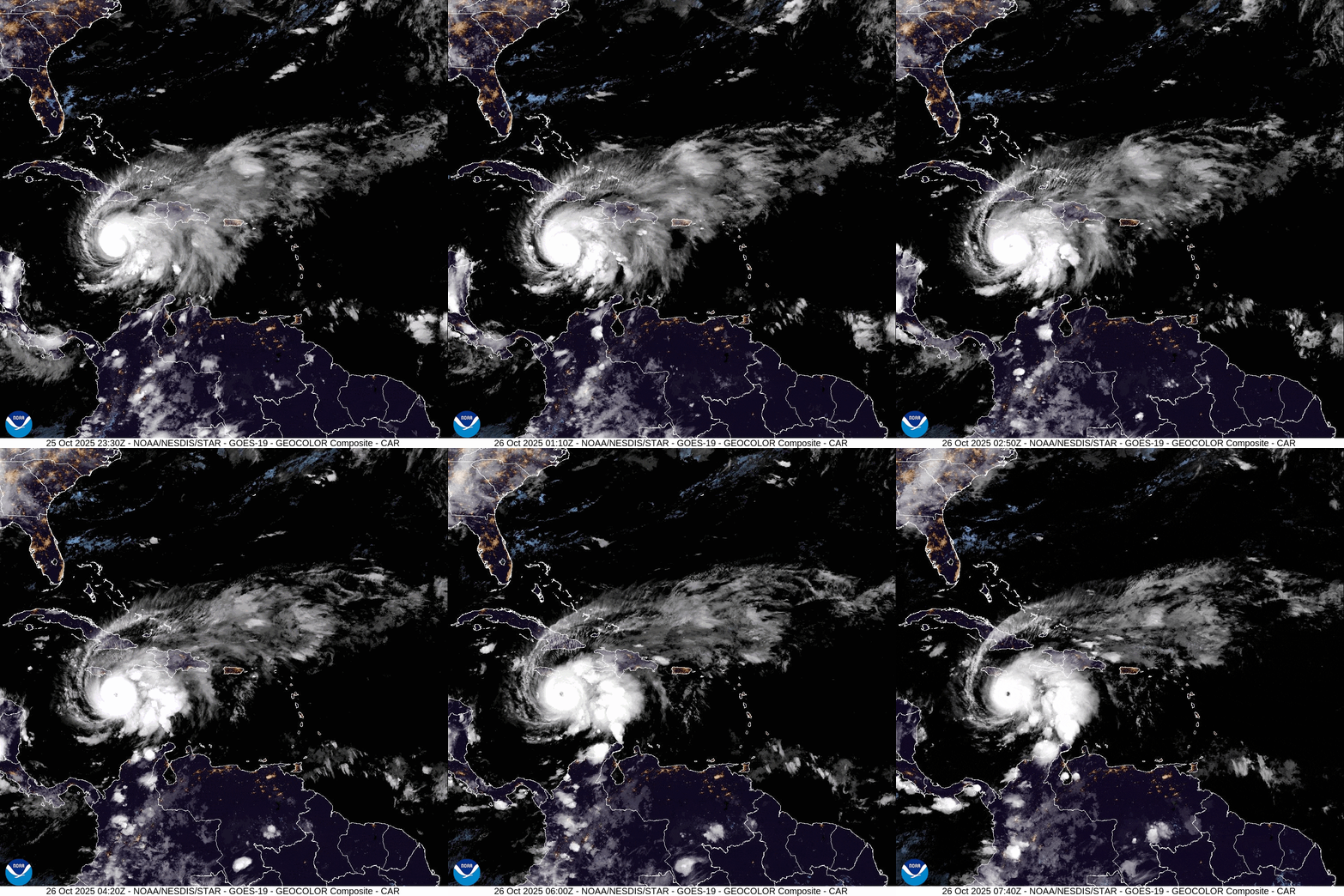
NOAA GIF of Hurricane Melissa
Melissa’s path was not straight, on its approach to Jamaica, it actually completed a completed a circle before moving closer to Jamaica’s south coast. Melissa’s track strengthened south of Jamaica, made landfall in western Jamaica near New Hope/Westmoreland, then crossed the island, moved into the Caribbean Sea, struck eastern Cuba, and later brushed the Bahamas and Bermuda.
In Jamaica the most affected parishes were Westmoreland, St Elizabeth, Hanover, Trelawny, St James. The storm surge, torrential rains and destructive winds combined to devastate coastal communities and inland areas alike. In Haiti and Cuba heavy rain-bands, flooding and landslides also caused significant damage.
3. Human Impact: Deaths, Injuries and Displacement
As of early assessments:
In Jamaica, initial death tolls stand at 32 confirmed deaths as of November 4, though numbers are expected to rise.
In Haiti dozens were killed, in some reports 43 deaths and 13 missing in one tally.
Across the region the combined fatalities are at least 60 based on Reuters reports.
In Jamaica alone thousands of people were displaced. The Pan American Health Organisation (PAHO) reported that by 29 October, about 25,000 persons were housed in shelters in Jamaica; the number could rise further.
Projections in Section 9’s Lab show the death tool could rise to over 100 in the next few weeks.
4. Economic Losses and Property Damage
Preliminary estimates from AccuWeather placed total damage and economic loss at between US$48 billion and US$52 billion across the western Caribbean region. In Jamaica the Prime Minister suggested conservative damage figures of US$6-7 billion.
Physical infrastructure loss was widespread. Whole buildings collapsed, roads were washed out, power and communication lines were severed, and coastal resorts and tourism facilities sustained heavy damage.
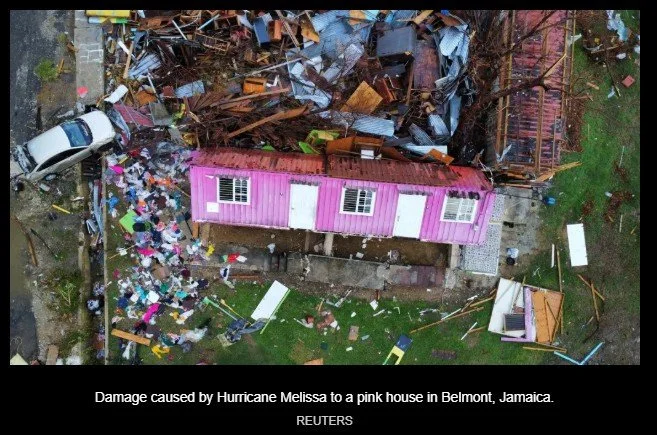
Damage caused by Hurricane Melissa to a house in Belmont, Jamaica - Source: Reuters
5. Utilities Impact: Electricity, Water and Communication
Electricity
In Jamaica approximately 530 000 people (about one-third of customers in some regions) were without electricity soon after landfall. The outage extended across multiple parishes and some areas lost communication entirely.
Water and Sanitation
Water infrastructure was disrupted by flooding, landslides and damage to systems. In Haiti, for example, heavy rainfall caused major river overflows and compromised access to safe water. Similarly in Jamaica treatment plants and distribution networks were compromised, leaving many households without potable water or with contamination risk.
Communication
Five of Jamaica’s fourteen parishes lost communications when Melissa hit. Downed infrastructure, blocked roads, inaccessible terrain and power outages combined to delay rescue and recovery operations.
6. Why Melissa Was So Devastating
Several factors made Melissa particularly harmful:
Extreme intensity and rapid intensification: The quick jump in wind speed and low central pressure meant less time to prepare and greater peak impact.
Slow movement: Because it slowed over parts of the Caribbean, heavy rainfall built up for extended periods, increasing flooding and landslide risk.
Geography and vulnerability: Many coastal communities had limited elevation, informal housing and infrastructure not designed for Category 5 winds and surge.
Combination of hazards: The storm did not just bring high wind; it brought storm surge, torrential rain, flooding and landslides. All these amplified each other.
Climate change influence: Warmer ocean temperatures added energy to the storm. Attribution studies suggest storms like Melissa are several times more likely in the current climate than they would have been pre-industrial.
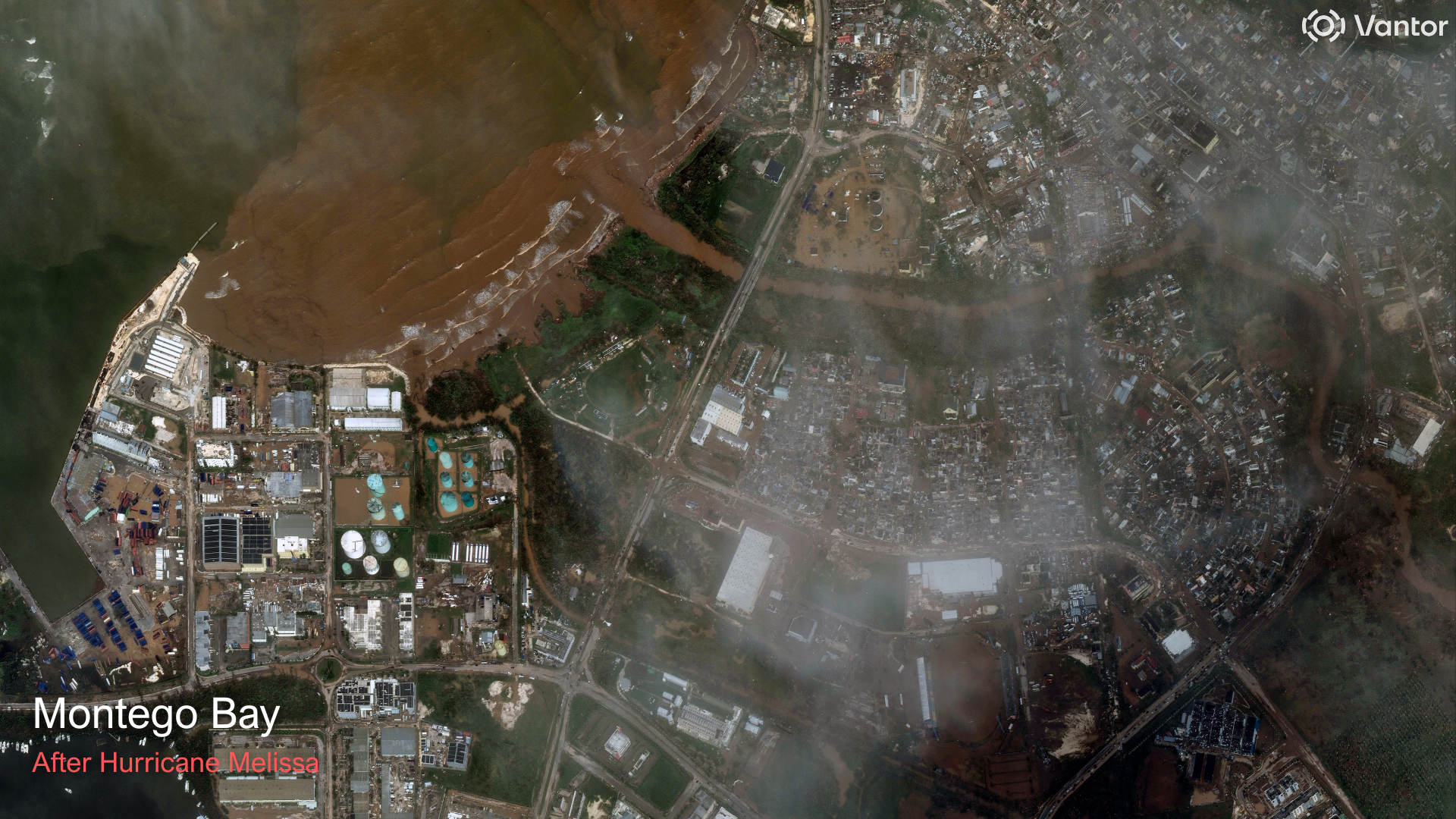
The aftermath of Hurricane Melissa in Montego Bay
7. The Jamaican Context: Why This Hit Hard
Jamaica had never been struck directly by a Category 5 hurricane. The previous major one was Hurricane Gilbert in 1988, which reached Category 3 on landfall. Melissa’s arrival as a Category 5 shattered that precedent.
Many of the hardest-hit areas were rural or semi-rural parishes with limited evacuation infrastructure. The internal parishes (St Elizabeth, Manchester) suffered flooding and landslides farther inland, not just coastal storm surge. That underlines how inland risk is often underestimated.
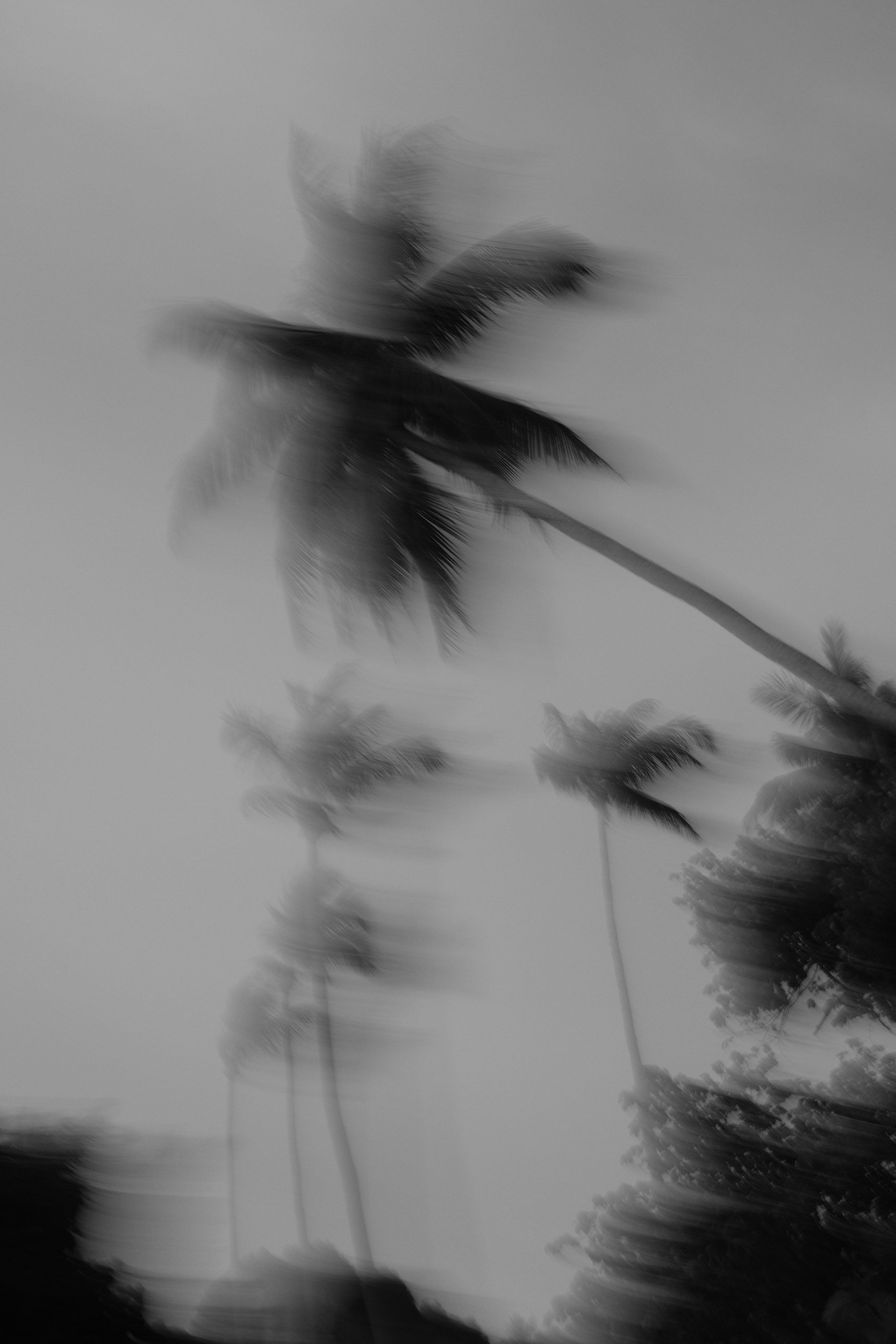
Trees in Hurricane Winds
8. Response Efforts and Recovery Outlook
Emergency response in the immediate aftermath focused on search and rescue, medical response and restoration of essential services. International aid flights were mobilised in Jamaica, and local militaries and disaster response agencies took action.
Restoration of electricity and water is expected to take weeks to months. The rebuilding of infrastructure, homes and economic livelihoods (especially tourism and agriculture) will stretch into years. The Caribbean region will need international financing, technical support and resilient rebuilding strategies.
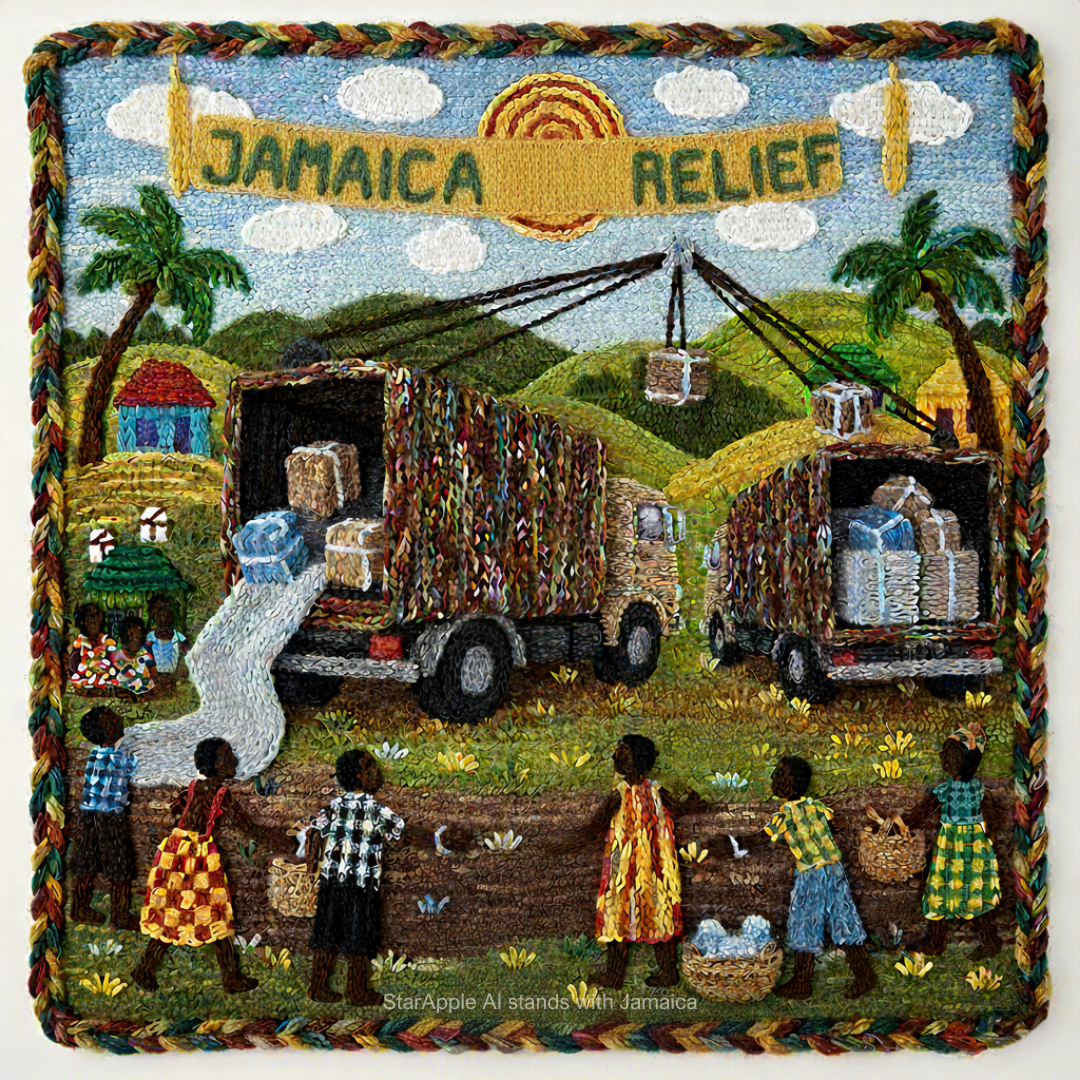
Yarn design of Hurricane Melissa Relief in Jamaica
9. Lessons Learned and Future Preparedness
Hurricane Melissa is a wake-up call for the Caribbean, and for any region vulnerable to tropical cyclones. Some key take-aways:
Early warning and communication must account for rapid intensification scenarios.
Infrastructure resilience must include not just coastal defences but inland vulnerabilities (flooding, landslides).
Utility systems (power, water, communication) need pre-emptive planning and redundancy.
Community preparedness, accurate perception of risk and effective evacuation behaviour matter.
Climate adaptation is no longer optional, storms are growing in intensity and speed.
10. What This Means for the Caribbean Region
For nations whose economies depend heavily on tourism, agriculture and coastal infrastructure, the shock from Melissa will ripple for years. Investment will be required in stronger building codes, disaster-hardening, resilient power and water systems, and updated evacuation planning. The human cost, lives lost, homes destroyed, livelihoods interrupted, emphasises the urgency of action.
Frequently Asked Questions
Q: What is a hurricane?
A hurricane is a large tropical cyclone that forms over warm ocean waters. It brings high winds (typically over 119 km/h or 74 mph), heavy rainfall, and often storm surge, which is the ocean being pushed inland by strong winds and low pressure.
Q: What does the word hurricane mean?
The word “hurricane” is derived from “Huracán”, the name used by the Taíno people of the Caribbean to describe a powerful storm god. It later entered Spanish and English usage to refer to tropical cyclones in the Atlantic-Caribbean region.
Q: What is Hurricane Melissa?
Hurricane Melissa was a powerful Category 5 hurricane in the Atlantic basin in late October 2025. It made history by making landfall in Jamaica at Category 5 strength with sustained winds around 185 mph and a minimum central pressure near 892 millibars. It caused massive damage across Jamaica, Haiti, Cuba and other Caribbean locations.
Q: What was the death toll for Hurricane Melissa?
Initial reports indicate at least 60 deaths across the region, although the exact number for Jamaica and other nations is still being revised upward. In Jamaica, early figures cited 32 confirmed deaths.
Q: What was the impact on utilities such as electricity and water?
In Jamaica, over 530,000 people lost electricity in the immediate aftermath of the storm. Water treatment plants, distribution systems and sanitation infrastructure were also heavily impacted by flooding and landslides, leading to widespread disruption in potable water access. Communication systems in several parishes were entirely offline.
Q: What else should we know about Hurricane Melissa?
Melissa was exceptional not just because of its strength but because of how fast it intensified, how broad its impact was (coastal and inland), and how the region’s vulnerability was exposed. It underlines the growing risk of extreme storms in a warming climate and the need for stronger preparedness.